
How NBCUniversal's Early-Career Media Tech Professionals Helped Deliver the Milan Cortina Winter Olympics
Early-career tech professionals Emily Abert and Ryan Nguyen take us behind the scenes of their work supporting the 2026 Milan Cortina Winter Games as part of NBCUniversal's Media Tech Associate Program.

March 04, 2026
For early-career professionals, few opportunities offer a better introduction to the fast-paced technical world of global broadcasting than working on the most-watched Winter Games since 2014.
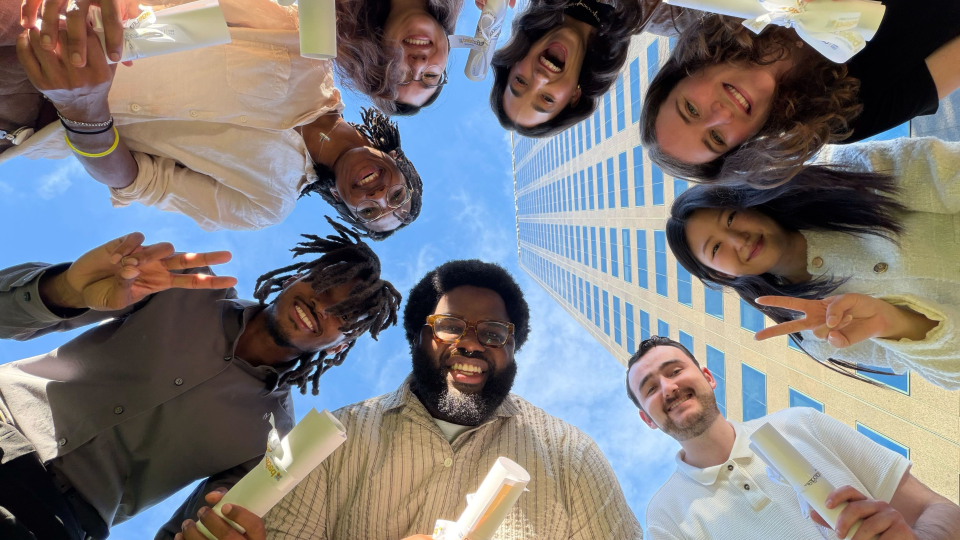
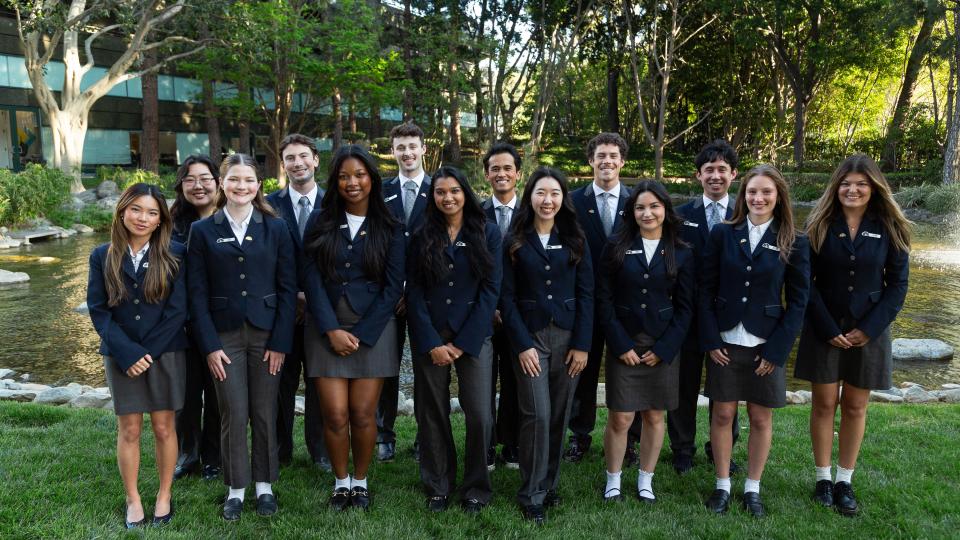
Associates in the immersive two-year program progress through three different rotations across five possible tracks – Business Solutions/Technical Operations, Cyber Security, Data Engineering, Enterprise Product & Services, or Software Engineering. Each track offers hands-on experience, mentorship, networking opportunities, and technical training. In the decade since its launch, 164 participants have graduated, with 90% going on to work for NBCUniversal as software engineers, product managers, cyber defense analysts, and other high-value positions.
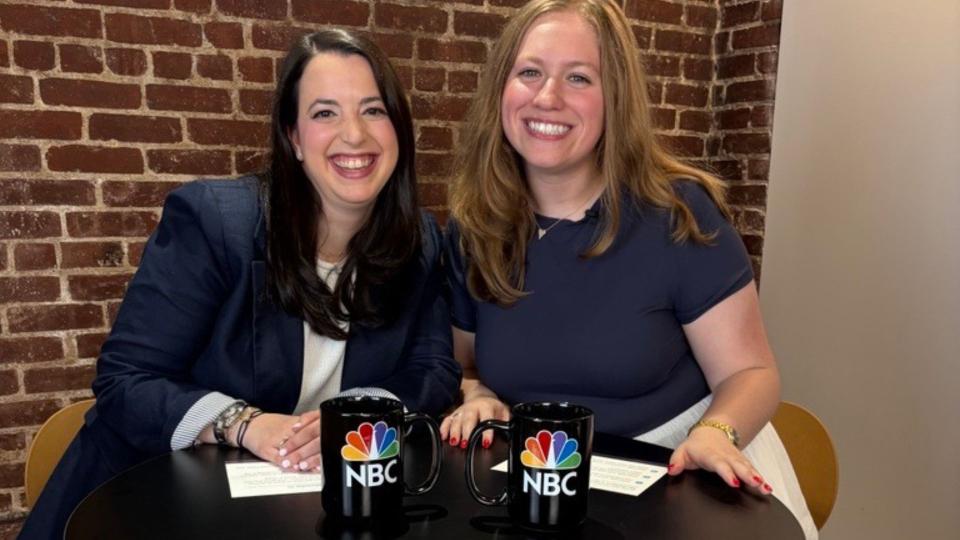
Emily Abert and Ryan Nguyen, two members of NBCUniversal's Media Tech Associate Program, reflected on what it was like to launch their careers during the 2026 Milan Cortina Olympics.
Abert covers video production and delivery from NBC Sports' headquarters in Stamford, CT. Nguyen, meanwhile, spent much of his time supporting IT and technical setup from Milan at the International Broadcasting Center, as well as some of the Olympic competition venues themselves.
What is your background and how did you find your way into the Media Tech Associate Program?
Ryan Nguyen: "I graduated from Northwestern University where I studied theater and data science, so a very interesting combo. I was always really interested in the combination of both technology and entertainment and storytelling. So that's kind of what brought me to my internship with NBCU working with the multi-platform strategy team on the entertainment side, and then from there I learned about the Media Tech Associate Program. I was excited by the chance to pick up so much experience."
Emily Abert: "I graduated from Penn State University in 2024. I studied computer science and then minored in French at school. I initially started my internship at Comcast in Philadelphia where I heard about the Media Tech program. I was really fascinated and curious because I would be able to jump between teams and the whole media aspect. I'm a huge sports fan, so I've always dreamed of being able to come to Stamford in some way. NBC Sports and the Big Ten Conference have a long-term partnership, so to claim that I was part of something that helped air my football team, like that's kind of cool."
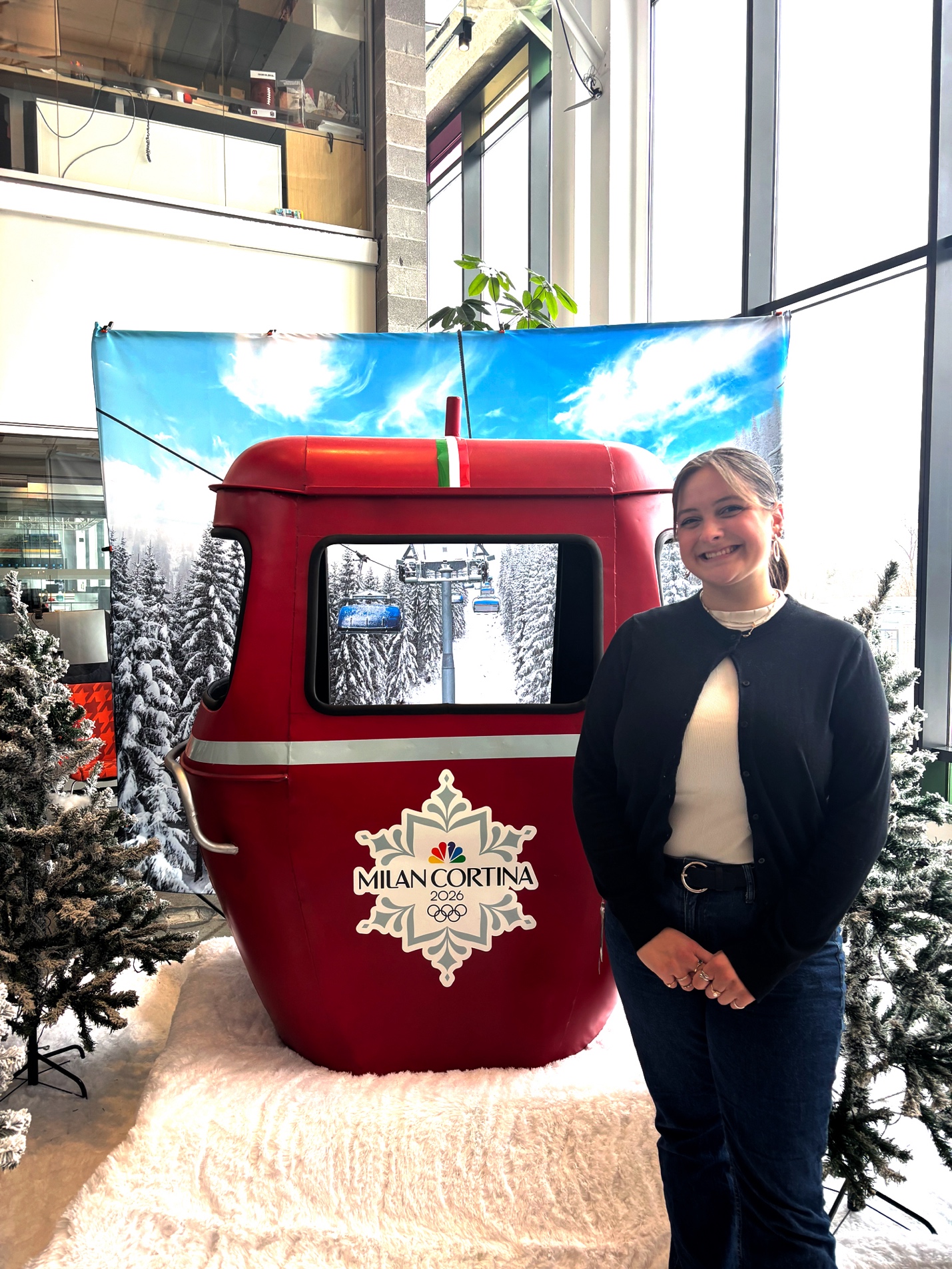
Emily Abert poses by the Milan Cortina gondola installation at NBC Sports Headquarters in Stamford, CT
What kind of work were you doing for the Milan Cortina Olympics? Can you step us through a typical workday?
Emily Abert: "It kind of changed from day to day. I'll say it's a very big team effort, not just one person working in one area. But we would typically have a meeting every day or every other day to discuss where the entire team was and/or where my team was."
"This is my third and final rotation and it's with the global network distribution team, specifically the video engineering side. My team was responsible for a lot of the distribution when it came to live events. There's a huge workflow that goes from the camera to someone physically watching it. With the Olympics especially, the team is focusing on getting the streams out and ensuring that there are no blackouts or anything like that."
"It is really an all-hands-on-deck environment where everyone is engaged, supports one another, and jumps in when needed. Regardless of individual knowledge, the main goal and focus is working together to ensure that everything is running as smoothly as possible."
Ryan Nguyen: "When I was in in Milan, I kept telling my manager – it really felt like a theater load-in. I don't know if people are familiar with that, but it's basically like a day or a week where a theater production company gets into the space and you have to put up the set, you have to put up the lights, you're running around making sure everything's ready for showtime."
"With that background, I'm used to fast timelines, physical setups, problem‑solving on the fly, and understanding that everyone has a specific role that needs to come together seamlessly for the show to go on. It's great that the Media Tech program put me in a role where I get to use those skills."
That kind of all-hands preparation was happening on a massive scale throughout NBCUniversal's coverage of the Winter Olympics. NBC Sports offered more broadcast hours than any previous Winter Games and Peacock streamed every event in every sport during the 17-day span of the Games, often with multiple camera angles and simultaneous live feeds. On Peacock, viewers could choose up to four events to watch at once, along with behind-the-scenes cameras – all powered by new technology designed to create a more immersive live sports experience.
Capturing, editing, mastering, transmitting, and delivering that much video is an enormous undertaking that requires new workflows, new tools, and several thousand highly trained people around the world working in sync.
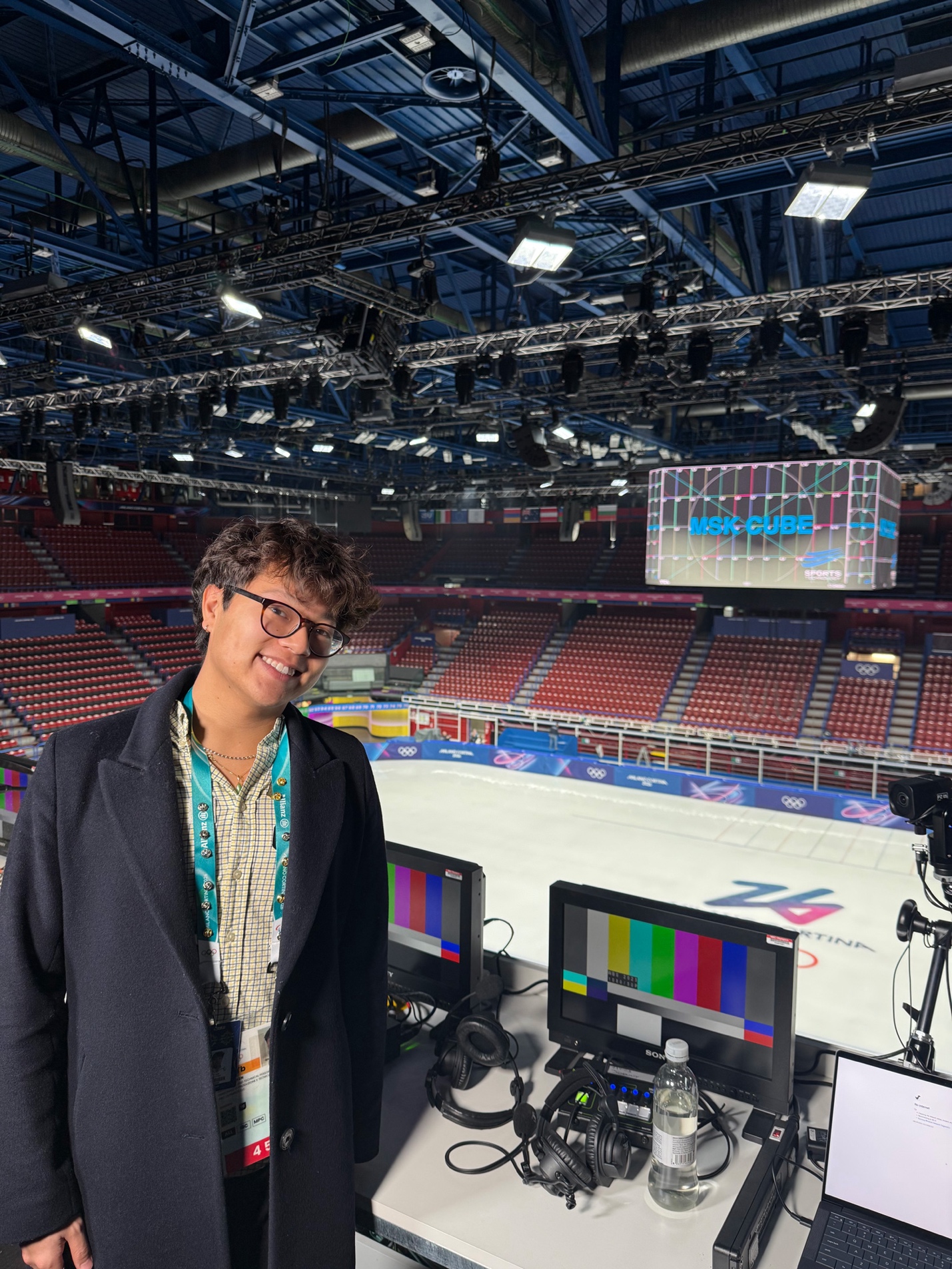
Ryan Nguyen sets up commentator information systems (CIS) at Milan's figure skating and short-track speedskating arena
When you tell people about your experience, what behind‑the‑scenes detail blows their mind?
Emily Abert: "Whenever I give people a general overview of broadcasting, they're always fascinated by how many steps and teams are involved, especially all the different locations. Most people assume that the video goes right from the camera to the TV, so explaining how the graphics, commercials, and timing all work really surprises them."
Ryan Nguyen: "What surprises people most is how global the operation really is. NBC doesn't just build Olympic coverage from scratch each time, we work closely with people who've supported past Games, so you end up collaborating with teammates from all over the world. I've worked alongside people from places like Brazil, Tokyo, Paris, and beyond, and everyone brings their own perspective, experience, and culture to the table. Big productions move quickly, and not everyone realizes what it takes to deliver coverage at this scale."
It sounds like everyone involved in the Winter Olympics was giving it their all from the athletes to the crew – what was your most challenging day like?
Ryan Nguyen: "One of my most challenging days actually took place before the Olympics even began. A big part of my responsibility in Milan was setting up the TV systems within the International Broadcast Center. After my daily morning meeting with the full team, I spent the day walking through the entire office to document TV locations and usage, nearly 150 TVs in total."
"As the day went on, it became clear how important it was to streamline how users controlled those TVs, especially for production and editorial teams who rely on quick, intuitive access. Like with a wall of 10 TVs, if you point a remote at it, it's going to change every single TV instead of just one. So it seems small in skill, but at the end of the day it's really important."
Emily Abert: "The NOC (Network Operations Center) in Stamford was only put up just this past year, and we're already producing the Olympics from there. My team does the business-to-business delivery of these video streams, so we don't send it to people's homes, but to distributors. During this Olympic coverage, the team also had Super Bowl LX and NBA All-Star Weekend."
"Detecting and resolving issues in real time is a big challenge. It is really important to find the root cause and fix it as soon as possible to prevent it from impacting the viewer and from happening again."
What would you want people to know about the Media Tech Associate Program?
Ryan Nguyen: "One of the biggest strengths of the program is the chance to network and collaborate with people across different departments and locations. Being able to contribute to a wide variety of projects while learning how different teams support NBCUniversal's larger initiatives has been an amazing experience. It's helped me better understand the scope of the company and where my skills can have the most impact moving forward."
Emily Abert: "Working on teams spanning both infrastructure and business-focused roles has helped me develop a broader understanding of how different parts of the organization operate. I especially appreciate the opportunity to rotate between teams because it allowed me to explore different types of work and better understand where my interests lie."
What's your absolute favorite Winter Olympics event?
Ryan Nguyen: "My favorite is figure skating. I love the combination of artistry and technical skill. There's something really powerful about watching the moment when a skater realizes they've nailed their routine and sees a lifetime of hard work come together in just a few minutes."
Emily Abert: "I really love watching the snowboarding half pipe. The tricks are all so incredibly impressive. I am always shocked to see the height the snowboarders get in their jumps."
About NBCUniversal's Media Tech Associate Program
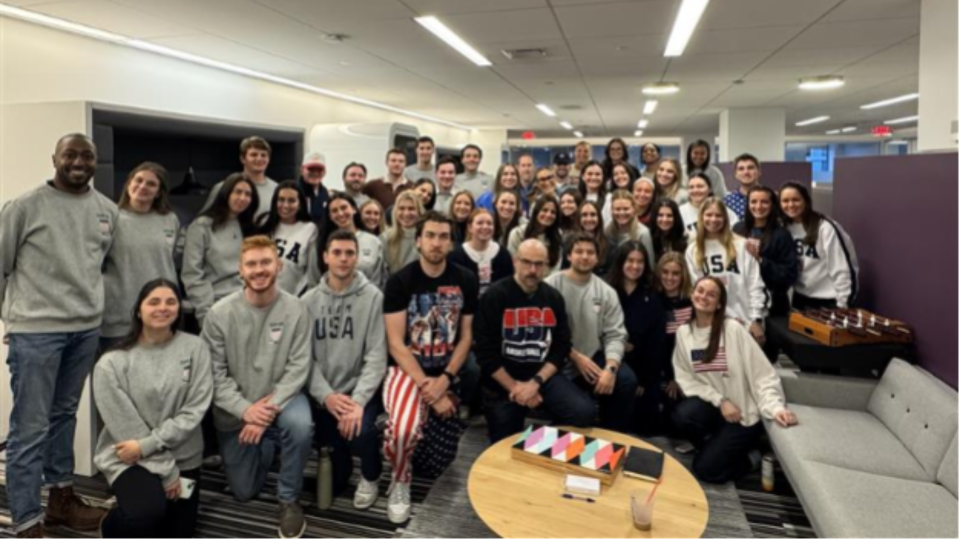
The 2-year rotational Media Tech Associate Program is designed to intentionally grow early‑career technologists into well‑rounded, industry‑ready professionals. In the decade since its launch, 164 participants have graduated, with 90% going on to work for NBCUniversal as software engineers, product managers, cyber defense analysts, and other high-value positions.
Associates develop through hands‑on, full‑time roles across multiple rotations within a chosen technology track, where they work on real business projects and deliver meaningful work that directly supports the company. For example, Media Techs play a key role in tackling foundational data engineering and governance work, building repeatable, audit-friendly systems that make access and changes transparent, reviewable, and well-documented over time. They contribute to the development of AI‑enabled tools that improve efficiency and support how teams operate, and they also help monitor and support cyber operations during some of NBCUniversal's most high‑profile moments, including the Olympics, Super Bowl, and the FIFA World Cup.
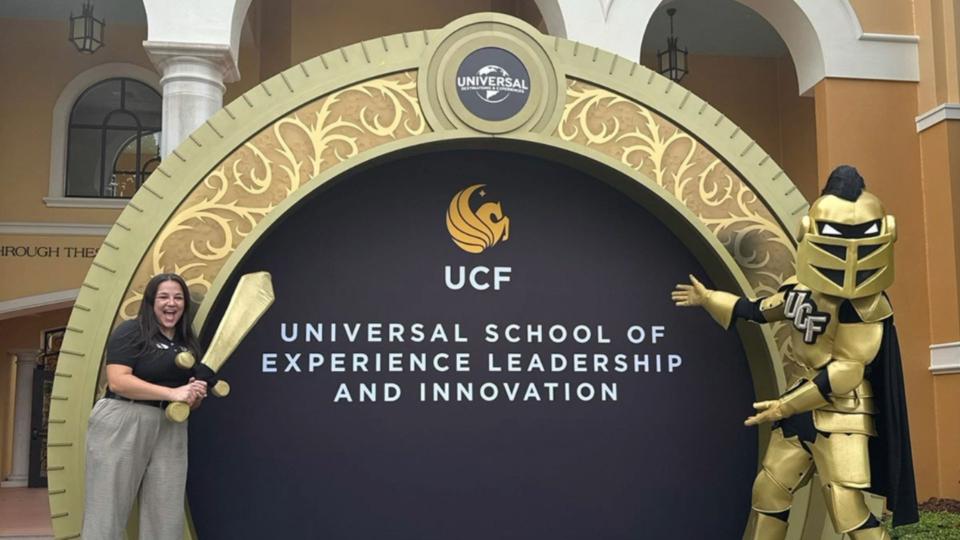
They partner closely with senior leaders across the organization, gaining exposure and insight from NBCUniversal's CTO, CIO, and CISO. Associates also take part in structured learning experiences throughout the program supported by key leaders, including a week‑long offsite in Orlando, Florida, where they build career ownership, confidence, and storytelling and presentation skills – while also experiencing the energy of our world‑class theme parks.
Learn more about the Media Tech Associates Program here.